I. Report Overview
The « 2025 China PV Construction Progress Report » was co-authored by the Institute of Public and Environmental Affairs (IPE) and Green Jiangnan, with technical guidance from the Chinese Research Academy of Environmental Sciences. The report comprehensively documents the remarkable achievements of China’s photovoltaic industry, provides an in-depth analysis of current challenges, and proposes recommendations for future development.
II. Key Data Highlights
1. Breakthrough Growth in Installed Capacity
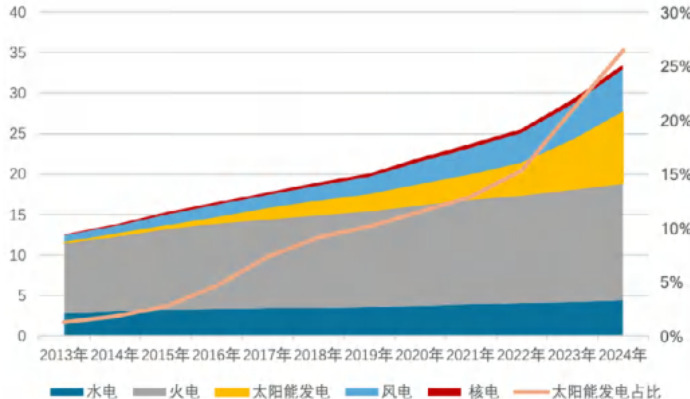
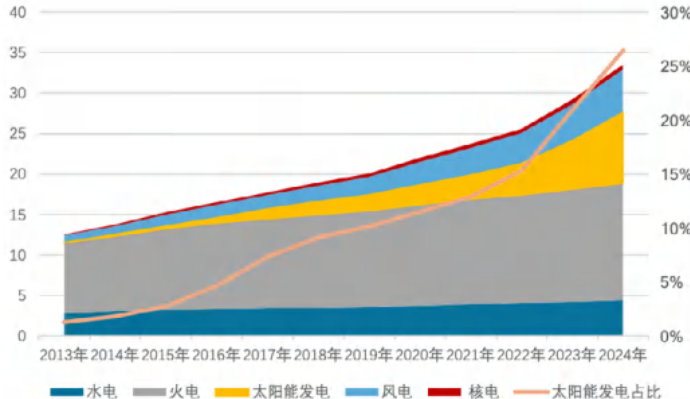
By July 2025, China’s cumulative PV installed capacity had exceeded 1.1 billion kilowatts, representing a year-on-year increase of 50.8%. In 2024, China’s new PV installations accounted for 61.24% of global new additions, ranking first in the world for the eleventh consecutive year.
2. Significant Increase in Power Generation
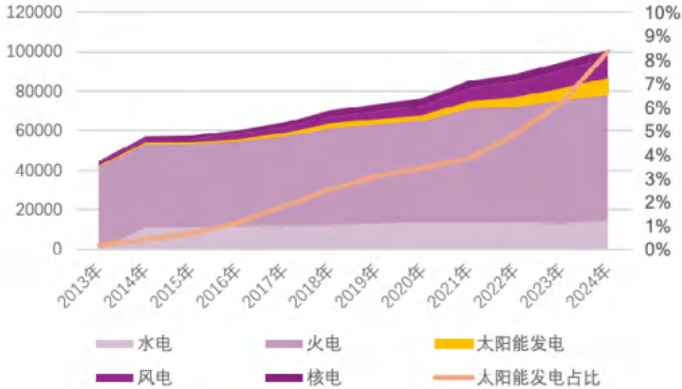
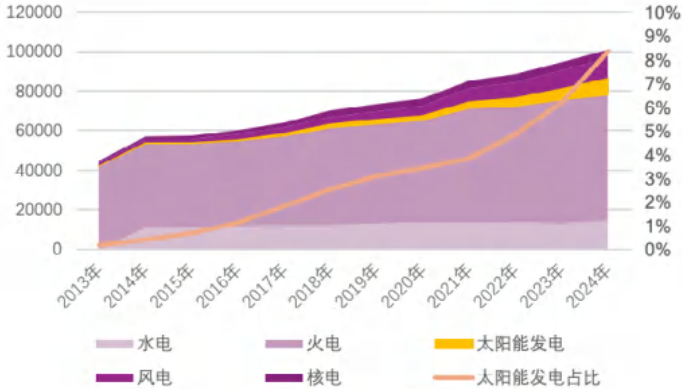
From 2013 to 2024, China’s solar power generation increased from 8.4 billion kWh to 839.04 billion kWh, a nearly 100-fold increase. Its share of total electricity generation rose from 0.2% to 8.3%.
III. Regional Development Characteristics
1. Centralized PV Dominance in the West
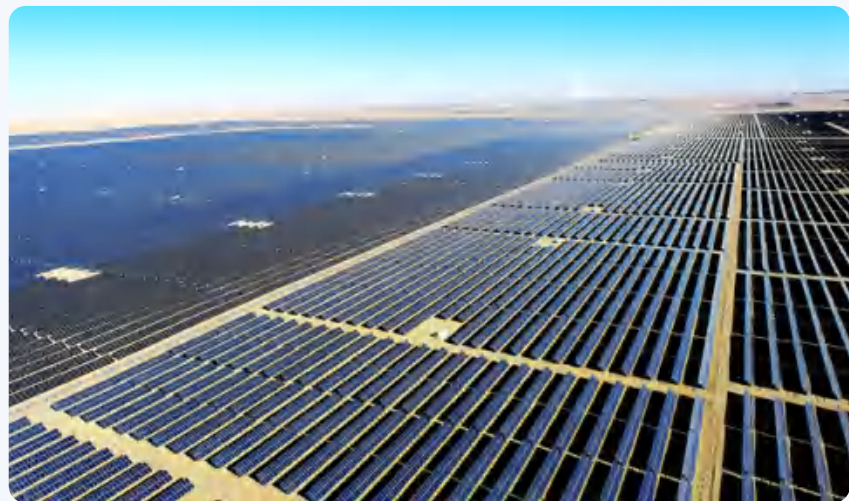
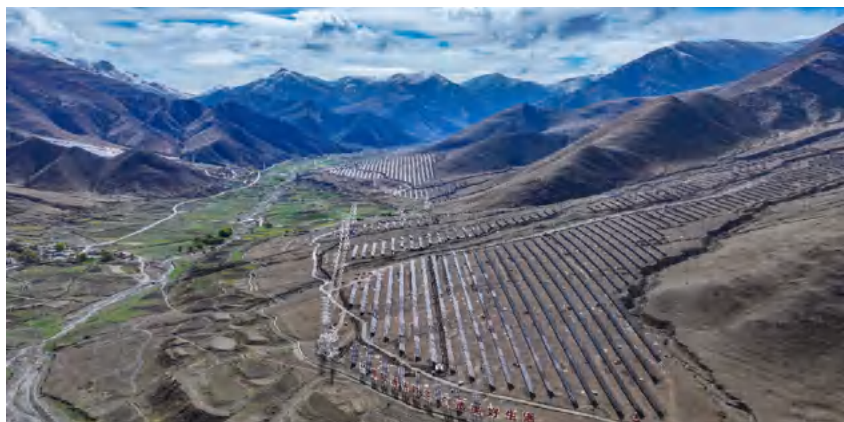
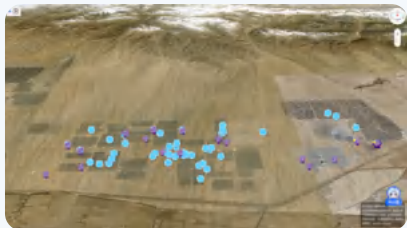
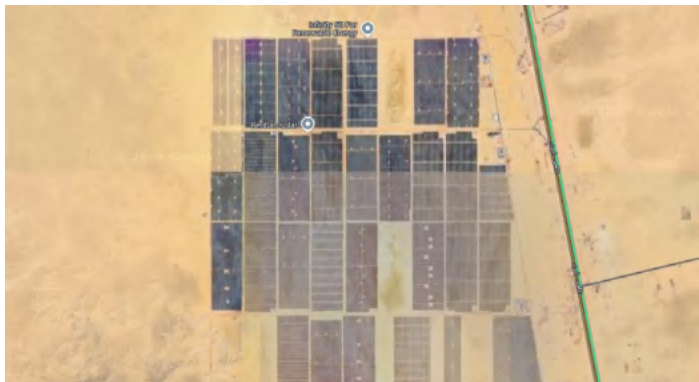
Northwestern provinces such as Inner Mongolia, Qinghai, Xinjiang, Gansu, and Ningxia, leveraging superior solar resources and land availability, have focused on developing large-scale centralized PV power generation. Qinghai Province leads the nation in the share of new energy installed capacity, with per capita PV capacity reaching 6.2 kW.
2. Distributed PV Leadership in the East
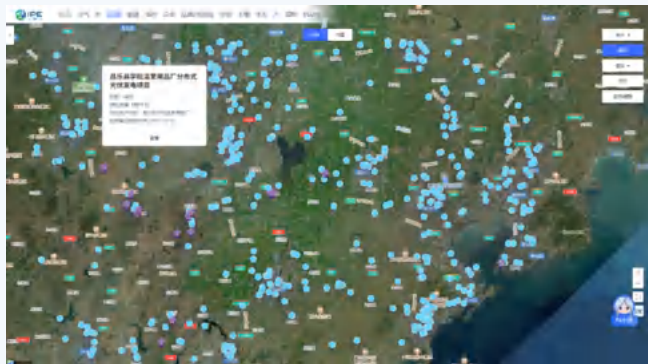
The distributed grid-connected capacity in Shandong, Jiangsu, Zhejiang, and Guangdong accounts for 51.1% of the national total. Shandong Province, through the « county-wide rooftop PV development » model, ranks first in the country for total PV installed capacity.

IV. Innovative Solutions
1. PV + Ecological Restoration Models
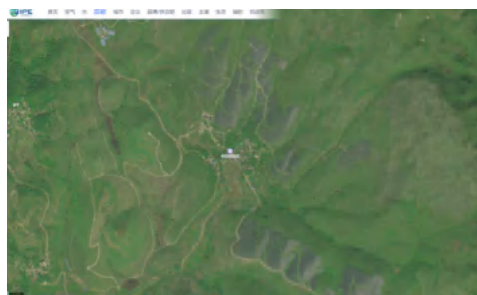
Active exploration of models such as agrivoltaics (agriculture + PV), aquavoltaics (fishery + PV), and pastoralovoltaics (grazing + PV) achieves a win-win situation for energy transition and sustainable land use. In southwestern rocky desertification areas, PV construction not only provides clean electricity but also helps consolidate desertification control efforts by replacing fuelwood consumption.
2. Energy Storage Technology Application
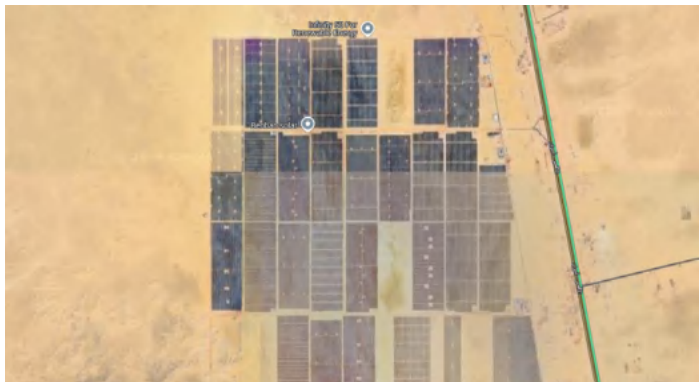
Co-locating energy storage facilities with large-scale PV bases in western China has become standard practice. The « PV + Storage » model helps smooth output and reduce curtailment. By the end of 2024, the cumulative installed capacity of operational new-type energy storage projects in China reached 73.76 GW.
V. Global Impact and Contribution
1. Significant Reduction in Technology Costs
China’s PV industry has driven a substantial decrease in global PV module prices. From 2010 to 2023, the total installed cost of PV systems decreased by 86%, and the levelized cost of electricity (LCOE) from solar PV fell by 90%.
2. International Cooperation and Exports
China has invested in 143 PV power plants across 39 countries overseas, with a total capacity of 11,648.187 MW. The « going global » of China’s PV industry has made significant contributions to global carbon emission reduction.
VI. Challenges and Countermeasures
1. Integration and Curtailment Issues
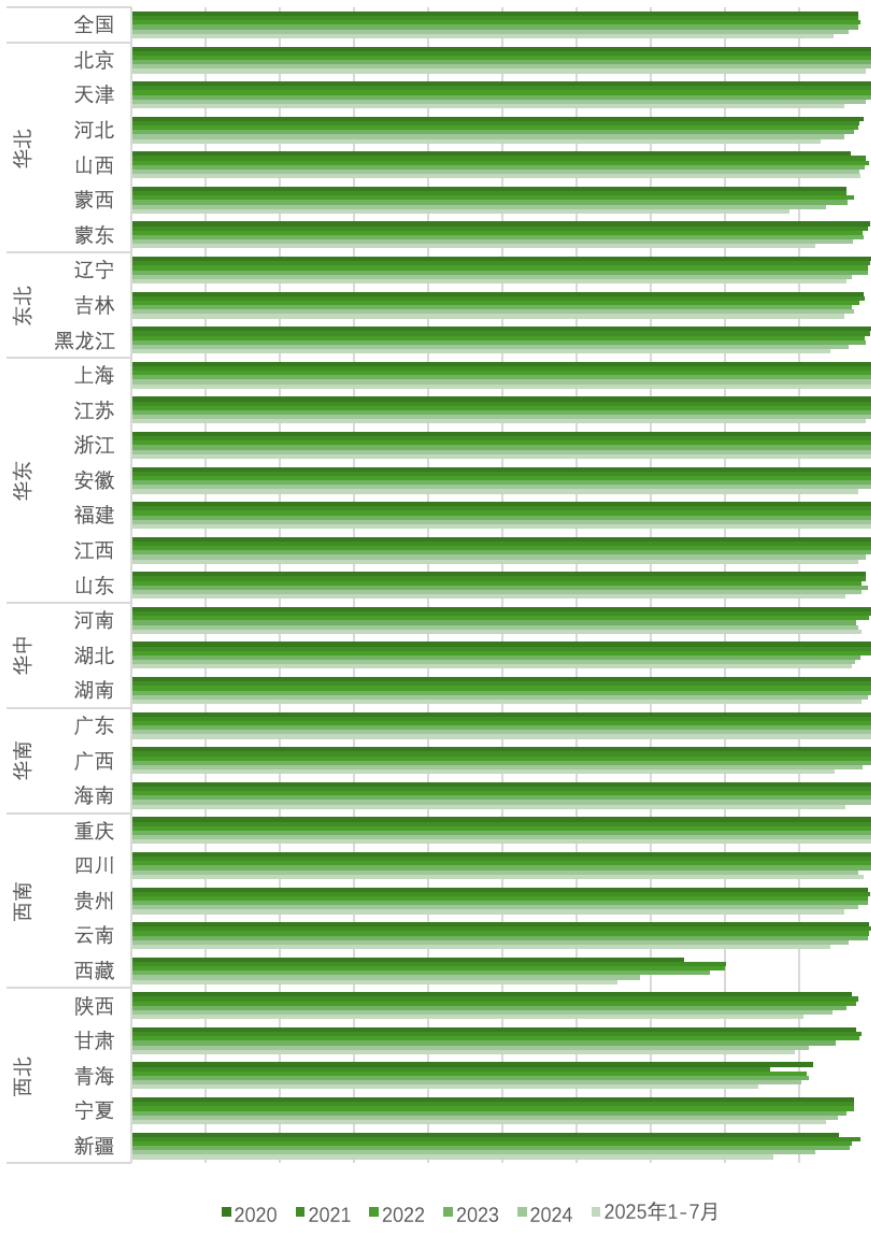
As the share of PV increases rapidly, challenges such as its variability, instability, insufficient energy storage, and limited grid capacity have become prominent. In 2024, the national PV utilization rate dropped to 96.8%.
2. Policy Responses
The government has introduced multiple policies to strengthen grid peak-shaving, energy storage, and smart dispatch capabilities, enhance inter-regional power mutual assistance, and promote the effective integration of renewable energy.
VII. Future Outlook and Recommendations
The report proposes six strategic recommendations:
- 1.1.Formulate long-term development strategies and strengthen top-level design.
- 2.2.Build a new power system and advance electricity market reform.
- 3.3.Improve standards for « PV+ » models and develop a circular economy.
- 4.4.Optimize the distributed PV market environment and innovate financing tools.
- 5.5.Build a zero-carbon supply chain and promote deep decarbonization of the industry.
- 6.6.Deepen international cooperation in PV construction to advance the global low-carbon transition.
Conclusion
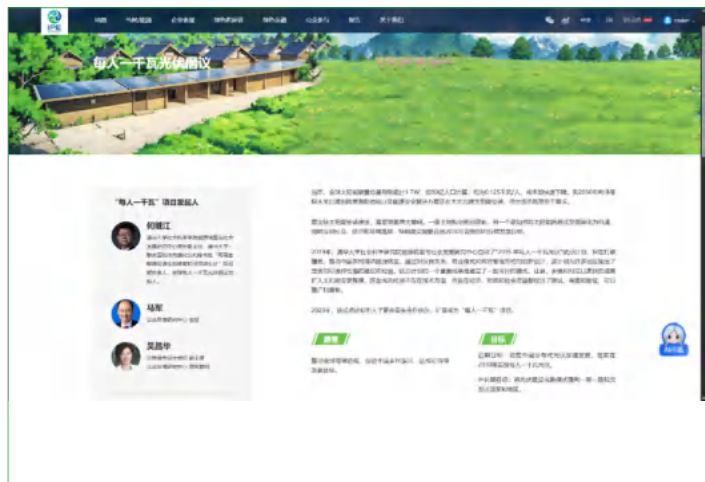
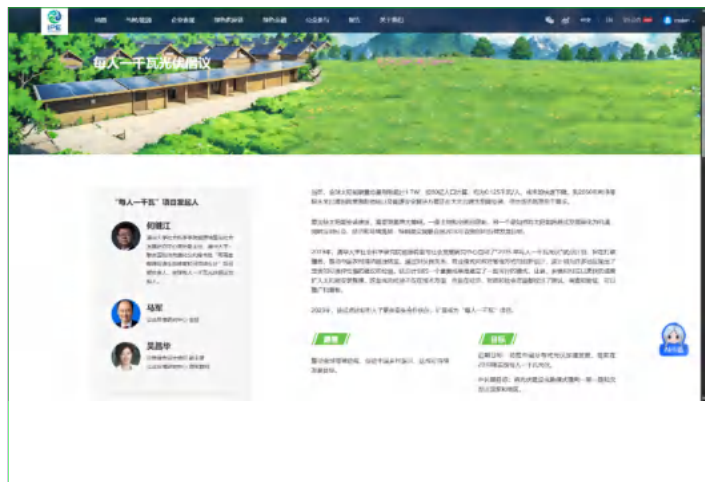
China’s PV industry is transforming its energy structure at an unprecedented scale and pace, providing not only core momentum for the domestic green economic transition but also valuable experience for the global response to climate change and the pursuit of energy self-sufficiency. The concept of « One Kilowatt per Person, » involving the whole population, breaks down the grand narrative into individual actions, paving the way collectively towards a new era of clean energy.
Report Release Date: September 2025 | Authors: Institute of Public and Environmental Affairs, Green Jiangnan | Technical Guidance: Chinese Research Academy of Environmental Sciences
Original Report in Chinese:
中文版概要
2025中国光伏建设进展报告:十亿千瓦向光而行
一、报告概述
《2025中国光伏建设进展报告》由公众环境研究中心(IPE)和绿色江南共同编写,中国环境科学研究院提供技术指导。报告全面记录了中国光伏产业取得的惊人成就,深入分析了当前面临的挑战,并提出了未来发展建议。
二、核心数据亮点
1. 装机容量突破性增长
截至2025年7月,中国光伏累计装机规模突破11亿千瓦,较去年同期增长50.8%。2024年,中国光伏新增装机量占全球新增量的61.24%,连续十一年蝉联全球首位。
2. 发电量大幅提升
2013年至2024年,中国太阳能发电量从84亿千瓦时增至8390.4亿千瓦时,增长近100倍,占总发电量比重从0.2%跃升至8.3%。
三、区域发展特色
1. 西部集中式光伏主导
内蒙古、青海、新疆、甘肃、宁夏等西北省区,凭借优越的光照条件和土地资源,大力发展集中式光伏发电。青海省新能源装机占比全国第一,人均光伏装机量高达6.2千瓦。
2. 东部分布式光伏领先
山东、江苏、浙江、广东四省分布式光伏并网容量占全国分布式光伏装机并网容量的51.1%。山东省通过 »整县屋顶光伏开发 »模式,光伏总装机量全国第一。
四、创新解决方案
1. 光伏+生态治理模式
积极探索农光互补、渔光互补、牧光互补等模式,实现能源转型与土地可持续利用的共赢。在西南石漠化地区,光伏建设不仅提供清洁电力,还通过替代薪柴消费巩固石漠化防治成效。
2. 储能技术应用
在西部大型光伏基地,配建储能设施已成常态。 »光伏+储能 »模式助力平滑输出、减少弃光。截至2024年底,我国已建成投运新型储能项目累计装机规模达7376万千瓦。
五、全球影响与贡献
1. 技术成本大幅降低
中国光伏产业驱动了全球光伏组件价格大幅下降。2010-2023年,光伏发电装机总成本降低86%,光伏发电平准化电力成本降低90%。
2. 国际合作与输出
中国在海外39个国家投资了143个光伏发电厂,总计装机量11648.187兆瓦。中国光伏 »出海 »为全球控制碳排放做出了重要贡献。
六、挑战与应对策略
1. 消纳问题
随着光伏占比快速提高,其波动性、不稳定性、储能不足、电网承载力有限等问题日益凸显。2024年全国光伏发电利用率降低到了96.8%。
2. 政策应对
国家出台多项政策,加强电网调峰、储能和智能化调度能力建设,提升跨区域电力互济能力,促进可再生能源的有效消纳。
七、未来展望与建议
报告提出六项战略建议:
- 1.1.制定长期发展战略,强化顶层设计
- 2.2.构建新型电力系统,推进电力市场改革
- 3.3.完善 »光伏+ »标准体系,布局循环经济
- 4.4.优化分布式光伏市场环境,创新投融资工具
- 5.5.建设零碳供应链,推进行业深度脱碳
- 6.6.深化光伏建设国际合作,推进全球低碳转型
结语
中国光伏产业正以空前的规模和速度推进能源结构变革,不仅为国内经济绿色转型提供核心动力,也为全球应对气候变化、实现能源自给提供宝贵经验。全民参与的 »每人一千瓦 »理念,将宏大叙事分解为个体行动,共同迈向清洁能源新时代。
报告发布日期:2025年9月 | 编写单位:公众环境研究中心、绿色江南 | 技术指导:中国环境科学研究院
No responses yet